
Key Takeaways:
*Last updated: August 2026*
Hydro excavation costs roughly $200 to $600 or more per hour across the national market. In Arkansas, CTS Services charges $250 to $300 per hour for a hydrovac truck with an operator, and most full jobs land at a day rate of $3,000 to $3,500. Final cost depends on soil type, dig depth, site access, and spoils disposal.
Every dollar figure in this guide is a range rather than a fixed price. Soil conditions, travel, and disposal vary too much from one site to the next for a single flat number to be honest. Use the table below to set a working budget, then call CTS Services at (501) 778-4535 for a free, site-specific quote.
These figures blend published industry estimates with CTS's real Arkansas rate ranges. Once scope is known, your quote may land inside, below, or above them, so treat the table as a budgeting tool rather than a bid.
Hourly billing is the standard model for hydro excavation because production speed depends on the ground itself. CTS charges $250 to $300 per hour for the truck and operator, with a two-person crew, a supervisor plus a technician, on most jobs. Typical PPE, tape, and basic consumables are included in the rate. Offsite spoils disposal and extra lengths of hose are billed separately.
Most full jobs bill against a day-rate minimum of $3,000 to $3,500. That figure folds in the hourly truck and driver cost, fuel surcharge, consumables, and disposal of the vacuumed material. Travel distance and overnight stays push a project toward the top of the range or past it. No job is too small, but a minimum applies, and mobilization is quoted per job.
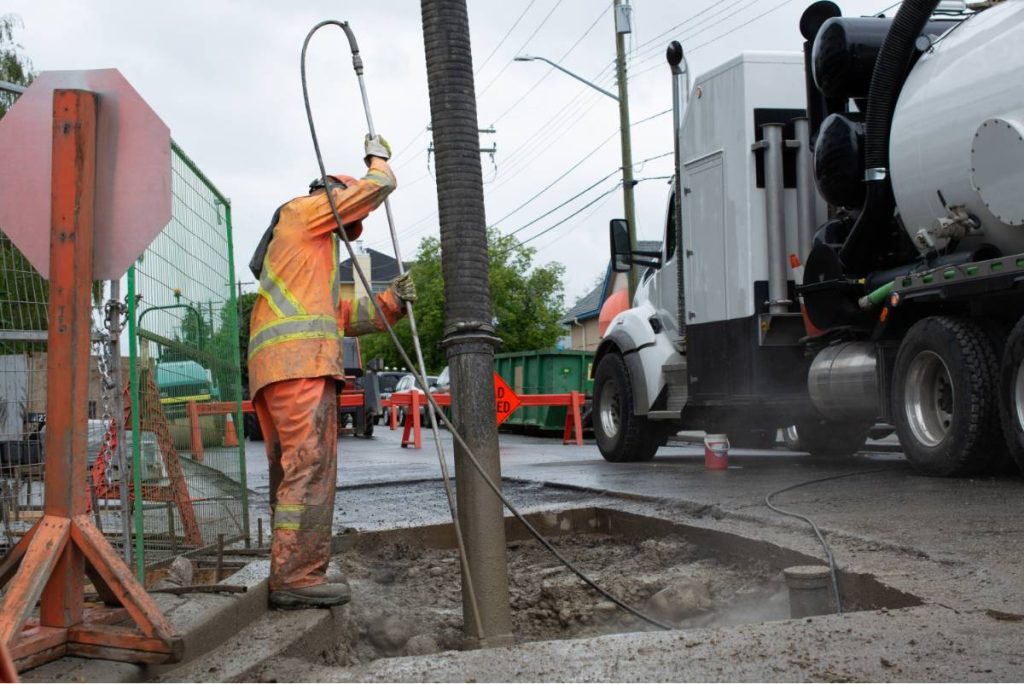
Hydro excavation is a non-destructive digging method that uses pressurized water to cut through soil and an industrial vacuum to pull the resulting slurry into a debris tank. Because there are no metal teeth or blades in the hole, it exposes buried gas, water, fiber, and electrical lines without damaging them. CTS runs a purpose-built hydrovac rig with an 8,000 psi, 18 gpm water system for digging. Full service details live on our hydro excavation services page.
A backhoe crew often bids lower per hour than a hydrovac truck, and on open ground with nothing buried below, mechanical digging can be the cheaper call. Near utilities, the math flips. A single struck gas, fiber, or electrical line can trigger repair bills, downtime, and liability that dwarf the hourly difference. Hydro excavation also disturbs less surface area, so restoration costs drop as well.
Two variables drive most of the movement in a hydro excavation quote, and five more fine-tune it. Here is how each one shifts the number.
Soil type is the number one cost factor. Hard clay and rocky ground dig far slower than sandy soil, which means more billed hours on the same scope. Depth compounds the effect, since deeper cuts take more passes and more vacuum time. A shallow pothole in loose soil and a deep cut in packed clay can differ by hours of billed time.
Potholing, daylighting, trenching, and slot trenching all bill hourly because production rates swing with the ground. Small verification potholes usually wrap up quickly, and long slot trenches take sustained cutting. The job type sets how many hours the soil conditions get multiplied across.
Travel and access shape both mobilization and the day rate. CTS is based in Benton and works primarily across Arkansas, with reach into Texas and Missouri, so longer hauls and overnight stays push a quote toward the top of the day-rate range. Tight sites that slow truck positioning add billed hours too.
Disposal distance is the second biggest cost factor. If vacuumed material can be deposited onsite, only the hourly or day rate applies and disposal adds nothing. Offsite hauling runs around $150 per load, and long round trips to a disposal point add drive time between digging passes.
Permits and utility locating add modest line items on jobs that need them, and CTS handles utility locating as part of its hydro excavation work. Traffic control is usually managed by the client, so it rarely appears on a CTS invoice. Confirm who owns each item before work starts so the quote and the site plan match.
Frozen or hard-packed winter ground behaves like rock until heated water softens it. Cold-weather digs take extra passes and extra hours, which raises the total on any hourly job. CTS offers cold-weather hydro excavation, so winter work is a scheduling and budgeting question rather than a stopping point.
Scheduled weekday work bills at the standard rate. After-hours call-outs run 1.5 times the normal hourly rate, and emergency and holiday response can reach double time. CTS answers its phone around the clock, so urgent work is available; it simply carries a premium worth planning around.
The job type does not change the rate; it changes how many hours the rate multiplies across. The comparison below shows how typical scopes stack up.
All four bill hourly against the same $250 to $300 range, with the day-rate minimum applying to most full mobilizations.
Potholing and daylighting are usually the least expensive hydro excavation jobs because each hole is small and fast. A series of verification potholes in friendly soil can wrap up inside a partial day, though the day-rate minimum typically still applies. Rocky ground stretches the same scope across more hours.
Trenching costs scale with length, width, and depth. Slot trenching stays economical because the cut is narrow, and full trenching runs may take one or more full days at the $3,000 to $3,500 day rate. Soil conditions decide how many feet a crew clears per hour.
Utility locating and exposure work bills hourly alongside the dig itself. Cost depends on how many lines need verification and how deep they sit. Exposing a shallow, well-mapped line takes far less time than hunting an unmarked crossing, which is why accurate site records lower the final bill.
A precise quote takes a few minutes of information up front. The more of the following you can share, the tighter the number CTS can commit to.
Gather these details before you call:
Missing a few items is fine. CTS walks through the gaps on the phone and can visit larger sites before committing to a number.
Generic national calculators cannot see your soil, your access, or your disposal options, and those three items swing a hydro excavation bill more than anything else. A site-specific quote from an experienced local contractor prices the actual job. CTS Services has operated since 2013 under owner Chad Slaughter, who brings 20-plus years of industrial and environmental experience, backed by a management team with 75-plus years combined. The fleet includes dry vacuum trucks up to 6,000 cfm, liquid-ring units up to 4,000 cfm, and 5,500-gallon tankers, so the right equipment shows up the first time.
Call (501) 778-4535 for a free hydro excavation quote.
CTS Services, Inc. is an Arkansas-owned industrial contractor based at 1218 River St., Benton, AR 72015. The company runs 9 trucks across a full industrial service line, including hydro excavation, vacuum truck services, hydroblasting, tank cleaning, and confined space rescue, so one vendor can carry a project from dig to disposal.
Crews are OSHA trained, and the company's EMR sits at 0.73, well below the 1.0 industry baseline. Locally owned means you reach a decision-maker on the phone, not a call center.
Quick answers to the cost questions Arkansas project managers ask most.
Hydro excavation typically costs $200 to $600 or more per hour nationally. CTS Services charges $250 to $300 per hour in Arkansas, with most full jobs landing at a $3,000 to $3,500 day rate. Final cost depends on soil type, dig depth, access, and disposal. Request a free site-specific quote for an exact figure.
Hydrovac services generally run $250 to $300 per hour in Arkansas for a truck and operator, with national rates spanning roughly $200 to $600 or more. After-hours work bills at 1.5 times the normal rate, and emergency or holiday call-outs can reach double time. CTS quotes every job by scope.
Hydro excavation costs more per hour than a backhoe but often costs less overall. The non-destructive method sharply reduces utility strikes, repair bills, surface restoration, and liability exposure. A single damaged gas or fiber line can cost thousands to repair, which quickly erases any hourly savings from mechanical digging.
Soil type is the number one pricing factor: hard clay and rocky ground dig slower than sandy soil, adding hours. Disposal distance ranks second, since offsite spoils hauling runs about $150 per load. Dig depth, job type, site access, travel, and scheduling also move the quote up or down.
Yes. Frozen or hard-packed ground takes heated water and extra passes, which adds time to an hourly job billed at $250 to $300 per hour. CTS runs cold-weather hydro excavation across Arkansas with equipment built to keep digging when frozen ground stalls traditional methods. Plan winter work early to control cost.
Share your site location, dig depth, soil type, known utilities, estimated volume, access conditions, timeline, and disposal needs. With those eight details, CTS delivers a precise, site-specific quote instead of a generic estimate. Call (501) 778-4535 or submit the online quote form to get started today.
Ready for a real number instead of a national estimate? Request a free hydro excavation quote or call CTS Services at (501) 778-4535 for a site-specific hydro excavation price.
Have questions or need assistance? We're here to help. Simply fill out our contact form below and one of our dedicated team members will respond promptly. Whether you're seeking information, scheduling a service, or providing feedback, your input is valuable to us. Reach out today and let's connect!